



[경제] Composition of Tundish Metering Nozzle: Materials, Structure, and Perf…
본문
Introduction
In modern continuous steel casting, the tundish plays a critical metallurgical role as a buffer, distributor, and refining vessel between the ladle and the mold. Among all tundish functional refractories, the tundish metering nozzle is one of the most important flow control components. Its material composition, internal design, and microstructure directly influence steel cleanliness, flow stability, nozzle clogging behavior, and casting safety.
Understanding the composition of a tundish metering nozzle is essential for steelmakers seeking to optimize casting performance, reduce operational interruptions, and improve product quality. This article provides a detailed, SEO-optimized explanation of the raw materials, phase composition, structural layers, additives, and functional zones of tundish metering nozzles used in continuous casting operations worldwide.
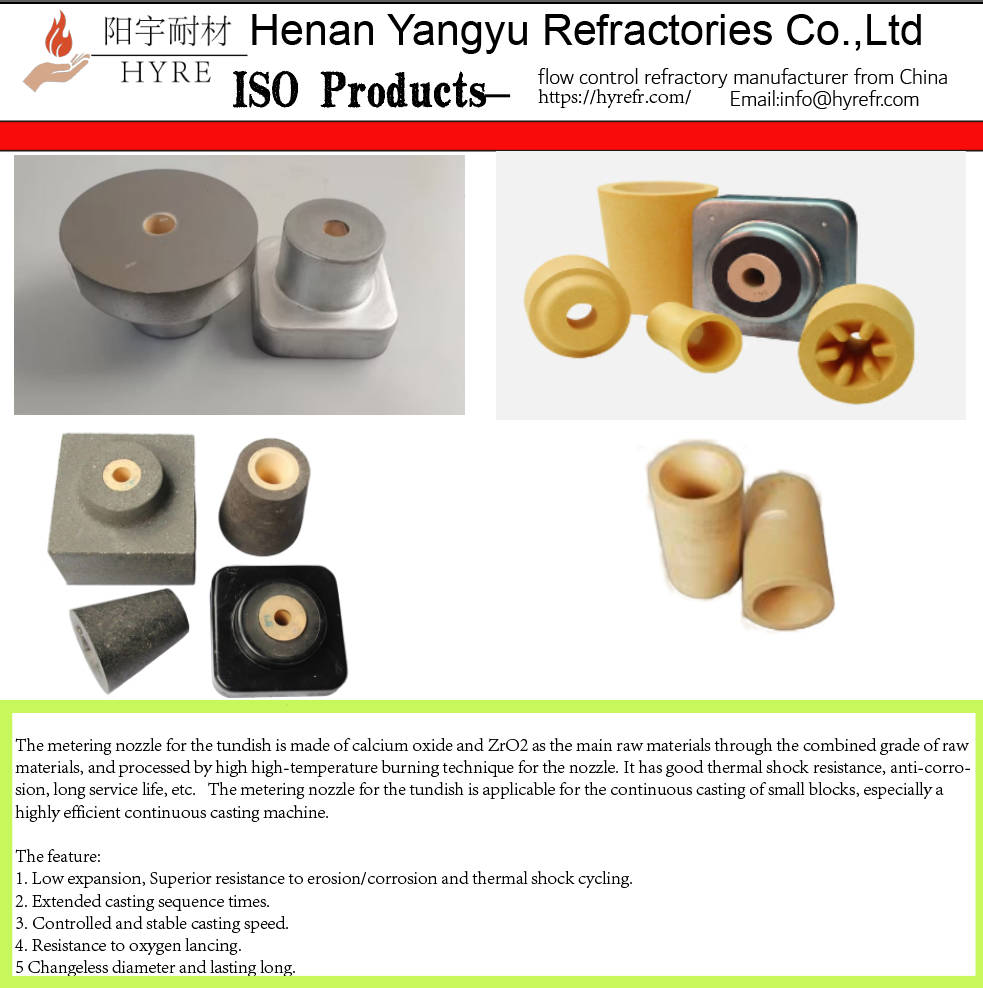
What Is a Tundish Metering Nozzle?
A tundish metering nozzle (TMN) is a precision-engineered refractory component installed at the bottom of the tundish to regulate the flow of molten steel from the tundish into downstream components such as:
- Sub-Entry Shrouds (SES)
- Submerged Entry Nozzles (SEN)
- Direct mold feeding systems
Unlike tundish well blocks or impact pads, the metering nozzle performs active flow control, requiring high dimensional accuracy, erosion resistance, and chemical stability. Its composition is therefore significantly more sophisticated than that of conventional monolithic tundish refractories.
Functional Requirements Driving Material Composition
The composition of a tundish metering nozzle is designed to meet multiple demanding service conditions:
- Continuous contact with molten steel (1550–1600°C)
- High thermal gradients and thermal shock
- Mechanical stress from stopper rods or slide gate systems
- Chemical attack by steel, slag, and inclusions
- Resistance to nozzle clogging and alumina buildup
- Gas permeability control (in argon-purged systems)
These requirements dictate the selection of raw materials, carbon content, bonding system, and additives.
Main Material Systems Used in Tundish Metering Nozzles
1. Alumina-Carbon (Al₂O₃-C) System
The most widely used composition for tundish metering nozzles is alumina-carbon.
Typical Composition Range
- Al₂O₃: 70–90%
- Carbon (graphite): 5–20%
- Metallic additives: 2–6%
- Resin or pitch binder: 2–4%
Role of Alumina (Al₂O₃)
- High refractoriness (>2050°C)
- Excellent resistance to steel erosion
- Low solubility in molten steel
- Structural backbone of the nozzle
Role of Carbon
- Improves thermal shock resistance
- Reduces wettability by molten steel
- Suppresses inclusion adhesion
- Enhances resistance to alumina clogging
Al₂O₃-C compositions are especially effective for aluminum-killed steels and long casting sequences.
2. Zirconia-Based (ZrO₂) Inserts and Hybrid Structures
High-performance tundish metering nozzles often incorporate zirconia inserts, particularly in the bore region.
ZrO₂ Content
- ZrO₂ purity: 94–99%
- Stabilizers: CaO, MgO, or Y₂O₃
Advantages of Zirconia
- Extremely low wettability to steel
- Outstanding corrosion resistance
- Minimal alumina buildup
- Superior resistance to clogging
Due to high cost, zirconia is typically used as a localized insert rather than a full-body material.
3. Magnesia-Based (MgO) Compositions
In some specific steel grades or operating environments, magnesia-carbon (MgO-C) materials are used.
Characteristics
- High resistance to basic slags
- Good performance in high-CaO environments
- Lower resistance to thermal shock than Al₂O₃-C
MgO-based compositions are less common for metering nozzles but may be selected in special applications.
Carbon Sources in Tundish Metering Nozzles
 flow control refractory
Carbon plays a critical role in nozzle performance.
Types of Carbon Used
- Flake graphite
- Expanded graphite
- Synthetic graphite
- Carbon black (minor amounts)
Functions of Carbon
- Reduces steel adhesion
- Improves thermal shock resistance
- Lowers friction with stopper rods
- Minimizes crack propagation
Carbon content must be carefully optimized to avoid oxidation loss, particularly during preheating.
Metallic Additives and Antioxidants
To protect carbon and enhance high-temperature performance, tundish metering nozzles contain metallic additives.
Common Additives
- Aluminum (Al)
- Silicon (Si)
- Magnesium (Mg)
- Boron carbide (B₄C)
- Silicon carbide (SiC)
Functions
- Formation of protective oxide layers
- Reduction of carbon oxidation
- Improvement of hot strength
- Enhanced resistance to slag penetration
The selection and dosage of additives significantly influence nozzle lifespan.
Binder Systems and Bonding Phases
Resin-Bonded Systems
Most tundish metering nozzles use phenolic resin bonding, which provides:
- High green strength
- Controlled carbon yield
- Dimensional stability during curing
Pitch-Bonded Systems
Used in some traditional designs but less common due to environmental concerns.
After firing or coking, the binder transforms into a carbon bond, strengthening the microstructure.
Structural Zones and Layered Composition
Modern tundish metering nozzles are multi-zone components, each optimized with different compositions.
1. Bore Zone
- High-purity Al₂O₃-C or ZrO₂
- Low porosity
- Anti-clogging optimized
2. Working Zone
- High erosion resistance
- Balanced thermal shock performance
3. Backup Zone
- Cost-optimized refractory
- Lower carbon content
- Structural support function
This graded composition design improves overall performance and cost efficiency.
Manufacturing Methods and Their Influence on Composition
Isostatic Pressing
- High density
- Uniform microstructure
- Precise dimensional control
- Superior corrosion resistance
Conventional Pressing
- Lower cost
- Suitable for short casting sequences
Isostatic pressing allows higher carbon and additive optimization due to better structural integrity.
Quality Control Parameters Related to Composition
Key quality indicators include:
- Bulk density
- Apparent porosity
- Carbon content
- Cold crushing strength (CCS)
- Oxidation resistance
- Thermal shock cycles
Consistent composition is essential for predictable performance.
Relationship Between Composition and Performance
| High Al₂O₃ purity | Improved erosion resistance |
| Optimized carbon | Reduced clogging |
| ZrO₂ insert | Extended casting sequence |
| Metallic additives | Longer nozzle life |
| Graded structure | Reduced failure risk |
SEO Keywords Integrated
- Tundish metering nozzle composition
- Tundish nozzle refractory materials
- Alumina carbon metering nozzle
- Zirconia tundish nozzle
- Continuous casting tundish nozzle
- Anti-clogging metering nozzle
- Steel casting refractory nozzle
Conclusion
The composition of a tundish metering nozzle is a carefully engineered balance of alumina, carbon, zirconia, metallic additives, and bonding systems, tailored to meet the extreme demands of continuous steel casting. By selecting the correct material system and structural design, steelmakers can significantly reduce clogging, stabilize steel flow, extend nozzle life, and improve overall steel cleanliness.
A deep understanding of tundish metering nozzle composition enables informed decisions in procurement, design optimization, and operational control, ultimately contributing to safer operations and higher-quality steel production.
댓글목록 0
등록된 댓글이 없습니다.



 예정된 월간일정이 없습니다.